Decorative Celtic Tree of Life: Hands-On Design Review
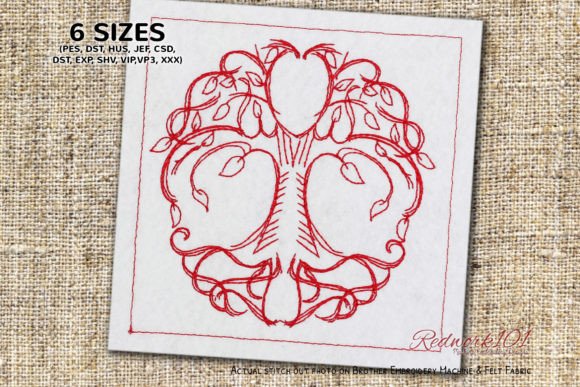
When I first opened the Decorative Celtic Tree of Life machine embroidery design, I was struck by how it balances ancient symbolism with a soft, whimsical feel. This is not an aggressive, heavily knotted Celtic piece. It feels lighter, more open, and surprisingly versatile for a design rooted in such a distinct visual tradition. The Forest Trees category it sits in makes sense, because the tree form is the star here, but the Celtic flourishes lift it beyond a simple silhouette. As someone who reviews embroidery files for real project use, my first thought was, “Where does this actually belong in a product lineup?” The answer, after testing it, is more places than you might expect.
I run a small custom apparel shop, and I am always looking for designs that feel meaningful but stitch cleanly across different products. The Decorative Celtic Tree of Life has that rare quality of being both a statement piece and a subtle accent, depending on how you size it and what you pair it with. Let me walk through what this design actually does on fabric, where it shines, and where you need to be careful before adding it to your digital embroidery file library or stitching it for a client.
First Impressions and Visual Personality
The design reads as a stylized tree with branches and roots that loop into gentle Celtic-inspired curves. It is not ultra-detailed, which is a strength in my book. Many Celtic embroidery designs try to cram too many knots into a small space, creating stitch density nightmares and thread breaks. This one breathes. The open negative space around the branches gives it an airy mood, almost like a line drawing that has been thoughtfully filled with satin stitch and fill stitch elements. It feels approachable, not intimidating, which matters if you are stitching for a baby gift, a housewarming present, or a boutique product that needs to appeal to a broad customer base.
The whimsy the product description mentions is real, but it is grounded. I would not call it childish. It is more like an illustration from a modern folk tale. That makes it a strong candidate for personalized gifts and handmade products aimed at adults who appreciate nature-inspired decor. If you are an Etsy seller looking for design assets that feel handmade and intentional, this file gives you that look without needing to digitize from scratch.
Real-Use Scenario: The Custom Tote Bag Test
I decided to test the Decorative Celtic Tree of Life on a medium-weight canvas tote bag for a local boutique order. The client wanted something that felt earthy but refined, suitable for farmers market shoppers and book lovers. I hooped the bag with a cutaway stabilizer, since canvas can shift under dense stitching, and used a medium hoop size that gave the tree about five inches of height. The result was clean. The satin stitch elements in the trunk and main branches laid down smoothly, and the fill stitch in the foliage areas gave it a textured, almost embroidered patch feel without needing an actual patch backing.
What I noticed immediately was how the design held its shape on a structured fabric like canvas. The tree did not distort, and the Celtic curves stayed crisp. I used three thread colors, a deep forest green for the leaves, a warm brown for the trunk, and a gold accent for the root loops. The contrast worked well, but I also tested it in a single-color black thread on lighter fabric for a more minimalist look. That version was just as striking and would work beautifully as an embroidered patch on a denim jacket or a sweatshirt embroidery placement.
The tote bag sold within two days at the boutique. The buyer specifically mentioned the tree design as the reason she picked it up. That is the kind of feedback that tells me this embroidery file has genuine product value. It is not just a pretty shape, it is a design that connects with people on an emotional level, which is exactly what you want for a craft business or small shop product.
Where the Design Performs Best
After running the Decorative Celtic Tree of Life through several projects, I have a clear sense of its natural habitat. It thrives on medium to firm fabrics where the stitch density can settle without puckering. Here is where I would confidently use it:
- Custom apparel: Sweatshirts, t-shirts, and lightweight jackets. The design sits well on a chest or back placement. On a sweatshirt, it feels cozy and intentional, like something you would buy from a high-end boutique.
- Tote bags and accessories: Canvas, cotton, and linen totes are ideal. The tree shape fills a standard tote front beautifully without overwhelming the bag.
- Home decor: Pillow covers, tea towels, and nursery decor. On a pillow, it reads like a subtle art piece. On a tea towel, it adds a handmade product touch that customers love for holiday gifts.
- Baby and kids items: Because the design is not sharp or overly intricate, it works well on baby onesies and blankets. The whimsical feel fits nursery themes, especially woodland or nature-inspired rooms.
- Embroidered patches: If you sell patches for craft fairs or Etsy, this design digitizes well as an embroidered patch. It keeps its shape, and the Celtic detail gives it a collectible feel.
- Boutique branding: For small shops that want a consistent visual identity, this tree can become a logo or signature accent on packaging, labels, or aprons.
The design also works well for holiday embroidery, particularly around Christmas or Yule, when tree imagery is in high demand. I stitched it on a set of kitchen towels as a hostess gift, and the recipient thought it was a custom commission. That speaks to the professionalism of the embroidery file itself.
Where to Use This Design Carefully
No design is perfect for every surface, and the Decorative Celtic Tree of Life has limits you need to respect. The most important factor is hoop size. If you try to stitch this design in a very small hoop, the inner details, especially the Celtic root loops and branch tips, can lose clarity. I recommend testing it at different sizes on scrap fabric before committing to a final product. If the finished tree is smaller than three inches, some of the finer lines may blur together, especially on textured fabric.
Speaking of fabric texture, this design does not love high-pile or loosely woven materials. Fleece, terry cloth, or heavy knits can swallow the satin stitch and make the tree look muddy. If you must stitch on those fabrics, use a strong stabilizer and consider adding a layer of water-soluble topping to keep the stitches raised. Stretch fabrics like jersey or ribbed knits also require careful hooping and stabilizer choice, because the design has enough density to cause distortion if the fabric shifts even slightly.
Dark fabrics are fine, but thread color contrast becomes critical. The tree needs to pop. A dark green or brown on black fabric will disappear. I tested it on navy with a gold thread, and the result was stunning, but only because I took the time to check the contrast on a mockup first. Always review the design in black and white mockups or on-screen before stitching dark backgrounds. This is especially important if you are selling finished products, because customer perception of clarity directly affects buyer engagement and trust.
Curved surfaces like caps or rounded sleeves are tricky for this design because of its overall shape. The tree is tall and roughly oval, so it fits better on flat or gently curved areas. If you try to center it on a cap front, the edges of the branches may distort. I would recommend this design for flat projects or garments with a stable surface. Save it for aprons, tote bags, pillow covers, and shirt fronts rather than caps or curved pockets.
Visual Appeal and Customer Value
One thing I have learned running a craft business is that customers pay attention to stitch quality. A design that sews out cleanly, with smooth satin stitch edges and even fill stitch coverage, signals professionalism. The Decorative Celtic Tree of Life delivers that level of finish. The stitch density is balanced enough that the design feels substantial without being stiff. The tree has a slight dimensional look when stitched, which adds perceived value to any handmade product.
For Etsy sellers and small shop owners, this design is versatile enough to appear in multiple product categories. You can list it on a personalized baby blanket, a holiday tea towel, a wedding gift pillow, or a boutique tote. That kind of flexibility reduces the risk of a digital embroidery file sitting unused in your library. It also means you can batch produce different products using the same design, saving digitizing costs and streamlining your workflow.
I also appreciate that the design feels timeless. Tree of Life imagery has been popular for years and shows no sign of fading. As long as you stitch it on quality blanks with good thread and stabilizer, the finished product will look relevant for seasons to come. That matters for shop owners who build a brand around evergreen designs rather than fleeting trends.
Practical Designer Notes Before You Stitch
Before you load this machine embroidery design into your machine and start a production run, here are a few notes based on my testing:
- Test on scrap fabric first. I cannot stress this enough. Every fabric and stabilizer combination behaves differently. Stitch a sample at the size you plan to use, then inspect the small details. Check that the Celtic curves are fully formed and that the fill stitch areas are not pulling the fabric.
- Check thread color contrast. The design works beautifully in monochrome, but if you use multiple colors, test them against your actual fabric. What looks good on screen may look flat in thread.
- Review stitch density. The design has moderate density, which is appropriate for most medium-weight fabrics. But if you are using a lightweight or delicate fabric, consider using a lighter stabilizer or reducing density in your software if your machine settings allow it.
- Confirm hoop size. The design, as provided, fits a medium hoop, but always measure the actual dimensions of the embroidery file in your software before hooping. Do not assume it matches your expectations.
- Use the right stabilizer. For most projects, a cutaway stabilizer gives the best results. For patches or very stable fabrics, a tearaway may work, but test it first. The satin stitch areas benefit from a stable base.
- Check licensing before selling finished items or digital products. The product description notes that this is a machine embroidery design for embellishing fabrics. Confirm whether your commercial embroidery license allows you to sell the finished products or the digital file itself. Different designers have different terms, and respecting licensing protects your business and your reputation.
- Test in black and white mockups. Before stitching for a client, render the design in grayscale to see if the value contrast works. This is especially helpful for custom apparel orders where the customer has chosen a fabric color that is close to one of your thread colors.
Final Thoughts on the Decorative Celtic Tree of Life
The Decorative Celtic Tree of Life is a well-balanced embroidery file that delivers on the promise of whimsy and charm without sacrificing stitch quality. It fits naturally into the Forest Trees category, but its appeal goes beyond nature lovers. Anyone who values symbolic, handmade design will respond to it. Whether you are stitching a personalized gift for a friend, building inventory for a craft fair, or expanding your Etsy shop with new product photos, this design gives you a solid foundation. It is not an overly complex file, and that is exactly why it works. It leaves room for you to add your own thread choices, fabric selections, and product vision. That is the mark of a design asset that deserves a place in your active rotation.